
Researching mechanistic processes
Researching mechanistic processes underlying the effect of music and music-based interventions on pain outcomes is a complex undertaking not the least because music is a complex phenomenon; humans’ histories and interactions with music are highly individual and bring significant challenges to studying hypothesized mechanisms.
It is this complexity that necessitates the formation of multidisciplinary teams to tackle the many challenges inherent in this research.

SOBC CLIMBR
The Checklist for Investigating Mechanisms in Behavior-Change Research (CLIMBR) is a standardized guide to help you conduct, report, and evaluate mechanism-focused research. It is designed to help researchers understand which mechanisms can be influenced through intervention and which mechanisms yield behavior change. (Read Full Text For More Information)
Music4Pain Conceptual Framework
Music & Music-Based Interventions
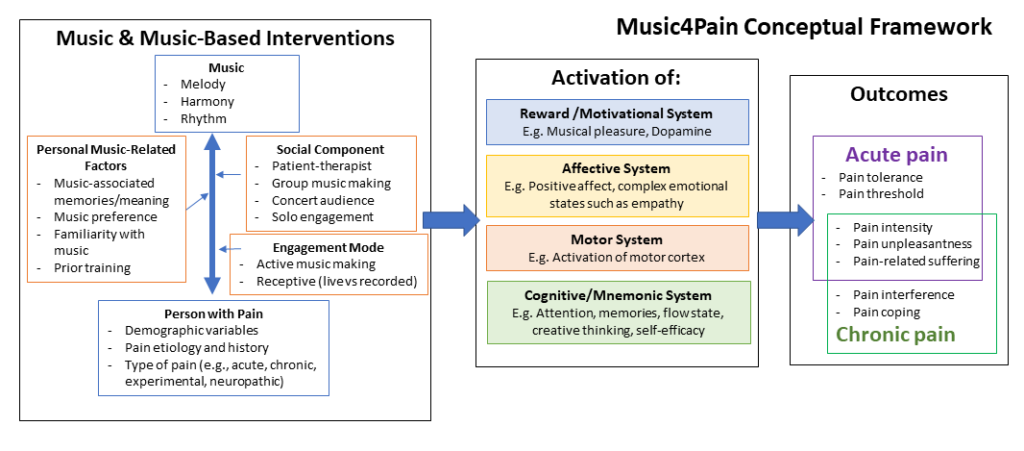
Figure 1 presents the conceptual framework that will form the initial basis for the work on developing a formal research agenda for the Music4Pain Research Network.
We view this framework as preliminary as we anticipate that network activities and dialogue with the wider scientific community will help to further refine and/or expand this framework.
Person with Pain
- Demographic variables
- Pain etiology and history
- Type of pain (e.g. acute, chronic, experimental, neuropathic)
Music
- Melody
- Harmony
- Rhythm
Social Component
- Patient-therapist
- Group music making
- Concert audience
- Solo engagement
Engagement Mode
- Active music making
- Receptive (live vs. recording)
Personal Music-Related Factors
- Music-associated memories/meaning
- Music preference
- Familiarity with music
- Prior training
Activation of:
Reward/Motivational System
E.g. musical pleasure, dopamine
Affective System
E.g. positive affect, complex emotional states such as empathy
Motor System
E.g. activation of motor cortex
Cognitive/Mnemonic System
E.g. attention, memories, flow state, creative thinking, self-efficacy
Outcomes
Acute Pain
- Pain tolerance
- Pain threshold
Acute & Chronic Pain
- Pain intensity
- Pain unpleasantness
- Pain-related suffering
Chronic Pain
- Pain interference
- Pain coping